
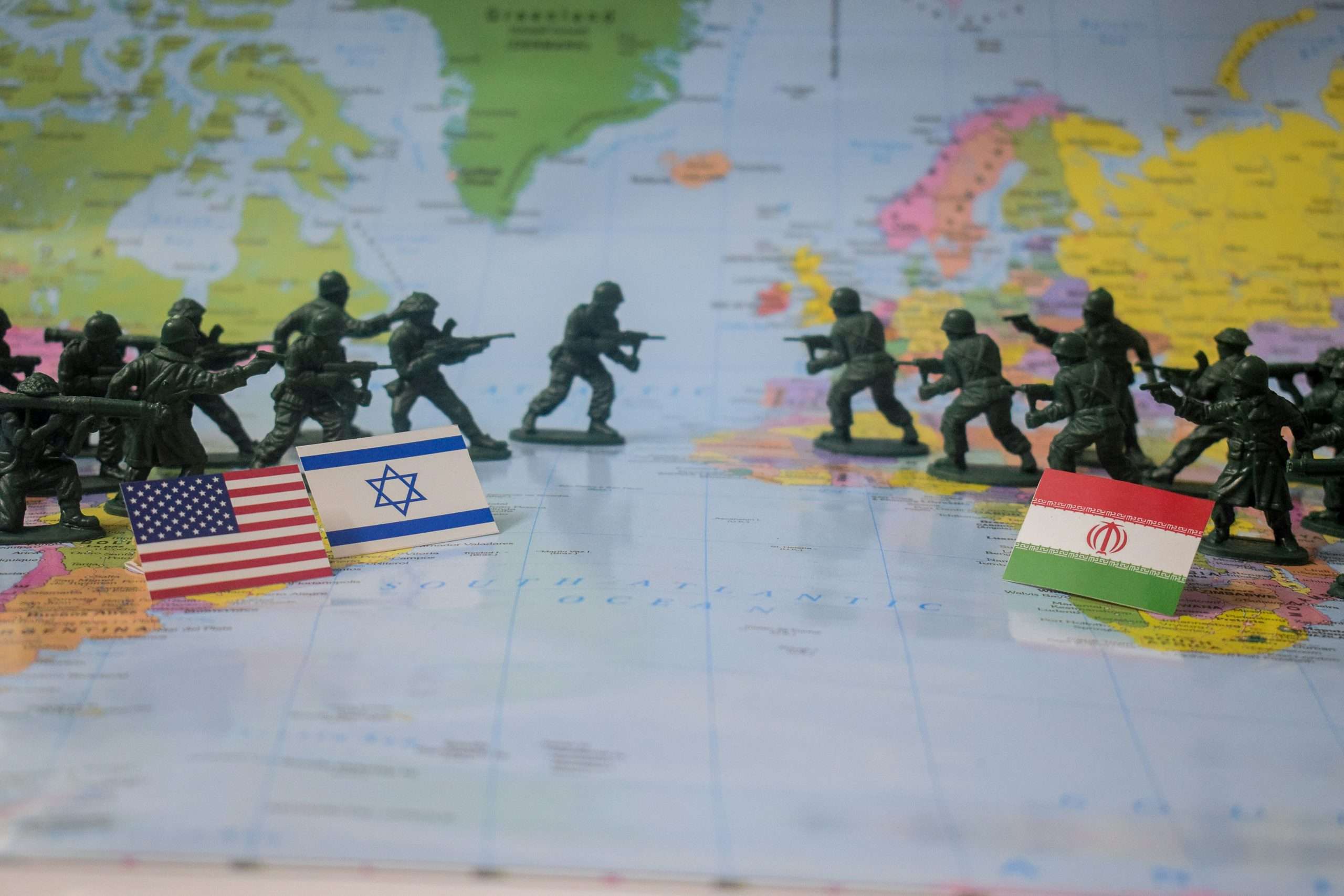
The headlines arrive faster than anyone can process them. Missile strikes. Warnings of retaliation. Oil markets jolt as tensions rise around the Strait of Hormuz. Governments scramble to evacuate citizens. Across television studios and diplomatic corridors, the same uneasy question returns: when will this conflict stop?
The latest escalation between the United States and Iran has once again pushed the region to the edge. Military strikes and counter-threats have reignited fears of a wider war across the Middle East, raised concerns about attacks on energy infrastructure, and prompted warnings of cyber retaliation that could reach far beyond the battlefield.
For global markets, the consequences are already visible. Oil prices swing sharply, shipping insurance premiums climb, and airlines reroute flights to avoid contested airspace. But the ripple effects extend much further.
Conflicts like this send shockwaves through the arteries of the global economy. Tankers carrying oil through the Gulf, cargo ships navigating strategic trade routes, airlines avoiding contested airspace, and businesses dependent on fragile supply chains all become part of the same unfolding risk landscape.
For insurers, that landscape is becoming increasingly difficult to map.
Because while the bombs may fall in one region, the financial consequences travel far beyond it.
A cyberattack launched in retaliation can strike companies thousands of miles away. A disrupted shipping lane can stall supply chains across continents. A spike in energy prices can trigger business interruption claims across entire industries.
This latest geopolitical escalation represents a real-world stress test for how well the insurance industry can understand and model risk in a deeply interconnected global economy.
A system built for yesterday’s risks
Insurance has traditionally relied on patterns. Historical data, geographic clustering and probabilistic modelling have provided a workable framework for pricing risks ranging from hurricanes to earthquakes.
Geopolitical conflict, however, behaves very differently.
“I think this shows that the industry is still far better at pricing historical patterns than dealing with genuinely fast-moving geopolitical shocks,” said Jason Tassie, Founder of Know Your Business.
“Conflict risk is non-linear. It can spiral rapidly into energy and supply-chain exposures all at once.”
That unpredictability makes geopolitical crises far harder to model than traditional perils.
When risks cascade
The Strait of Hormuz, which sits between Iran and Oman, is one of the most strategically important waterways on the planet.
According to the American Action Forum, around 20 million barrels of oil pass through the narrow channel every day, roughly a fifth of global consumption.
But the implications extend well beyond oil.
“Geopolitical conflict behaves less like a standard insurable peril and more like a fast-moving accumulation event,” said Gus Majed, CEO and Founder of Paratus.
In practical terms, this means insurers can find themselves exposed across multiple lines of business simultaneously.
A damaged port may trigger marine claims. Rising fuel prices can disrupt aviation. Manufacturing delays can lead to trade credit losses. Cyber retaliation may hit companies with no obvious geographic link to the conflict.
Few scenarios place greater strain on insurers’ risk models. Lloyd’s of London has warned that a major geopolitical conflict could cost the global economy as much as $14.5tn over five years, exposing insurers to cascading losses across political violence, marine, trade credit and business interruption cover.
“A conflict of this scale tests whether models capture not just proximity to the event, but concentration risk through chokepoints like Hormuz and correlated losses across classes,” Majed said.
The invisible cyber dimension
Beyond oil tankers and shipping lanes, another layer of risk is quietly unfolding beneath the surface of the US–Iran tensions: cyber conflict.
Security analysts have long warned that escalation between the two countries could trigger retaliatory cyber operations targeting infrastructure, businesses and supply chains far beyond the immediate region.
The precedent already exists. In 2012, the Shamoon malware attack wiped data from roughly 30,000 computers at Saudi Aramco, one of the world’s largest energy companies, forcing the firm to replace large parts of its IT infrastructure and disrupting operations for days.
Events like this has meant that cyber activity has already become a defining feature of modern geopolitical competition. According to IBM’s X-Force Threat Intelligence Index, nation-state actors were responsible for nearly 20% of cyber incidents investigated globally in 2023, often targeting critical infrastructure, financial services and energy networks.
For insurers, this introduces a more complex challenge.
“In a connected digital economy, risk doesn’t respect borders,” said Melanie Hayes, Co-Founder at cyber risk intelligence firm KYND. “An organisation might be headquartered in one country while its infrastructure, cloud services, or key suppliers are spread across entirely different regions.”
Geography alone tells insurers very little about where their real exposure lies.
Many companies depend on cloud platforms, third-party providers and digital infrastructure that operate across multiple jurisdictions.
“You can’t infer exposure from location alone,” Hayes said. “You need genuine visibility into an organisation’s digital footprint — where their infrastructure lives, which services they depend on, and how those dependencies stretch across the map.”
Without that insight, insurers risk misunderstanding how geopolitical disruption could affect their portfolios.
“Geopolitical cyber activity rarely stays contained within borders,” Hayes said. “Without visibility into the infrastructure organisations rely on, insurers risk underestimating how geopolitical shocks could cascade across portfolios.”
The danger, in other words, lies not only in where a conflict occurs but in how quickly its digital consequences spread.
A shift toward real-time risk
To close this visibility gap, insurers are increasingly turning to new sources of data.
Satellite imagery can monitor infrastructure activity. AIS shipping data tracks vessels moving through high-risk regions. Sanctions screening tools flag exposure to restricted entities.
“Satellite imagery, AIS shipping data, sanctions screening, cyber threat intelligence and AI-assisted scenario analysis can all improve visibility,” Tassie said.
But gathering information is only part of the challenge.
“Modern platforms are strong at ingesting external data and refreshing exposure views in near real time,” Majed said. “Where they still struggle is translating messy geopolitical signals into confident underwriting decisions.”
In fast-moving crises like the current US–Iran escalation, the real difficulty lies in converting fragmented intelligence into timely risk management action.
Historically, risk assessments were conducted periodically. Portfolios were reviewed annually or quarterly, and underwriting assumptions were adjusted accordingly.
Geopolitical crises do not follow those timelines.
“When conflict starts affecting shipping lanes and energy prices so quickly, insurers and corporate clients want more than annual risk reviews,” Tassie said. “They want live exposure intelligence.”
Hayes sees the same shift emerging.
“Conflicts like these reinforce a broader move away from assumption-based risk assessment toward decisions grounded in continuously updated data about how organisations actually operate,” she said.
The future of geopolitical risk
Over the past two decades, the Middle East has repeatedly demonstrated how geopolitical shocks can ripple far beyond their point of origin. Iranian-linked cyber groups have previously targeted energy firms, financial institutions and infrastructure operators across Europe and North America, while tensions in the Gulf have triggered spikes in shipping insurance premiums and freight costs.
Each episode reinforces the same lesson: the physical geography of conflict may be local, but the economic consequences are global.
For insurers, the US–Iran conflict may prove to be more than a temporary disruption. It is revealing structural weaknesses in how geopolitical exposure is understood across portfolios.
“A fundamental problem is that concentration in politically sensitive regions is often assessed retrospectively,” Hayes said.
“By the time geopolitical exposure is reviewed at the portfolio level, the risk shape is already set.”
This means accumulation risk is often discovered only after policies have already been written.
“Risks are bound one at a time, without visibility into how they connect,” Hayes said. “A sanctions event, a conflict escalation, or a trade disruption can simultaneously stress a marine book, a trade credit portfolio, and a political violence account.”
Not because they overlap geographically, but because they share the same underlying supply chains and infrastructure.
The OECD estimates that more than 70% of global trade now flows through international supply chains, meaning disruption in one region can rapidly propagate across industries and continents.
Geopolitical shocks are unlikely to become less frequent. If anything, they are becoming more complex as digital infrastructure, global trade and energy systems grow more interconnected.
For insurers, this is reshaping what effective risk management looks like.
“The goal is not perfect prediction,” Majed said. “But a more adaptive insurance model that can quantify exposure, update assumptions quickly and deliver liquidity faster when traditional processes are too slow.”
Because in a world where conflict can ripple through energy markets, shipping routes and digital networks simultaneously, understanding risk is no longer just about where an event occurs.
It is about how quickly its consequences spread.
And as the US–Iran crisis is now showing, those consequences can travel much further than anyone expects.

